Runners Ascend Insights

The fundamentals of running, training and performance.

The Value of Treadmill Running

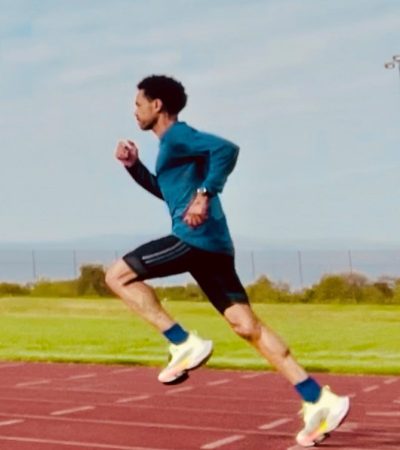
Treadmill running is often seen as something you do when the weather is bad. But used correctly, it can be one of the most valuable tools in a runner’s training.

The biggest advantage is control.

On a treadmill, you can control your speed, gradient, duration and recovery, making it particularly useful for structured sessions where consistency and precision matter.


Read More....
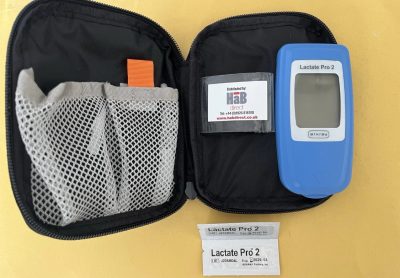
Lactate Meter

What Is Lactate Training — and How Can You Use It?

Lactate testing can sound complicated, but the basic idea is actually quite simple.

Lactate is produced during exercise and can give us useful information about how hard the body is working and how it is responding to different intensities.

A lactate meter allows you to measure this response during a structured test or workout. But you don’t need a lactate meter to apply the principles of lactate-based training.


Read More....
Zones

Understanding Training Zones: What They Mean and How to Use Them

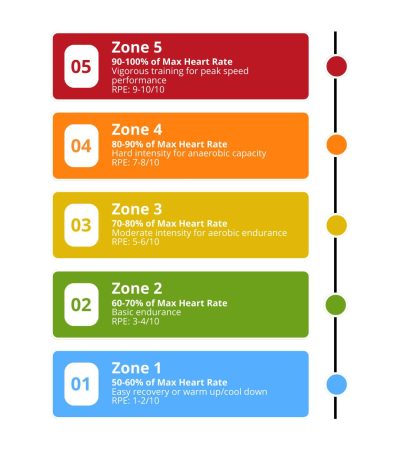
Training zones are designed to help runners control the intensity of their training.

You will often see five zones on a sports watch, but the important question isn’t simply “What zone am I in?”

The better question is:

“What am I trying to achieve with this session?”


Read More....
Pic for Training Zones

Understanding Different Types of Runs: How They Fit Into the 5 Training Zones

Not every run has the same purpose.

A well-structured training programme uses different types of running to develop different parts of your fitness. Understanding where these sessions generally sit within the five training zones can help you understand why you’re doing them and what you’re trying to achieve.

But one important point comes first:

The name of the session doesn’t determine the training zone.

The intensity, duration, recovery and the athlete’s individual physiology determine the training stimulus.


Read More....
Gym photo

Strength & Conditioning for Runners: Why Running Isn't the Whole Picture

Running is the most important part of running training. But running alone isn’t the whole picture.

Every time you run, your body has to produce force, absorb impact, stabilise itself and repeat that process thousands of times.

Strength and conditioning (S&C) can help develop the physical qualities needed to handle that workload and perform your running sessions effectively.

The goal isn’t to become a bodybuilder.

The goal is to become a stronger, more capable runner.

Read More....
Progress photo

How to Train and Progress: Building Fitness Over Time

Fitness isn’t built by one hard session. It is built by applying the right training stimulus, recovering from it, and progressively increasing what the body can handle.

Read More....

What Makes a Good Runner?

A good runner isn’t necessarily the runner who trains the hardest.

They’re the runner who learns how to train, recover, adapt and progress.

They understand that different sessions have different purposes.

They recognise that improvement takes time.

They learn from their experiences and remain willing to change their approach when they learn something new.

They don’t need every number to be perfect, but they want those numbers to tell them something useful. And perhaps most importantly, they keep showing up.

Read More....
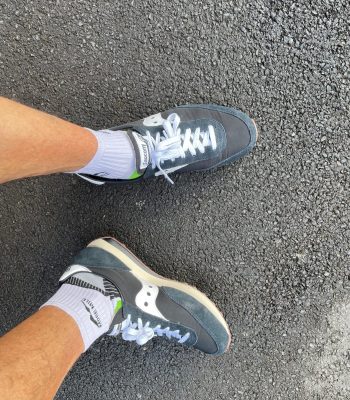
Running shoes

What Do You Actually Need as a Runner?

You have your training schedule. You know what sessions you’re supposed to be doing.

But what else do you actually need?

These days, there seems to be an endless amount of equipment designed to help runners train, measure, analyse and improve. GPS watches, heart-rate monitors, expensive running shoes, carbon-plated super shoes, recovery devices and all sorts of other technology.

Some of these things can be incredibly useful.

But you don’t need all of them.

In fact, you probably need much less than you think.

Read More....
food

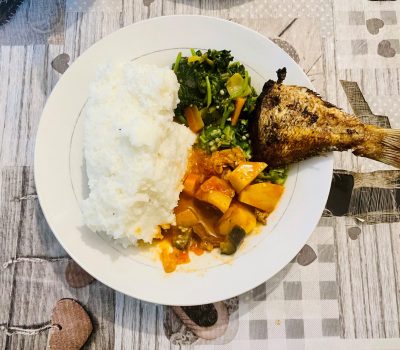
Nutrition for Runners: The Basics

Training is only one part of becoming a better runner.

What you eat and drink provides the energy and nutrients your body needs to train, recover and adapt.

But nutrition can sometimes seem far more complicated than it needs to be. There are endless diets, supplements, products and opinions telling runners what they should and shouldn’t eat.

The reality is that good nutrition doesn’t have to be complicated.

For most runners, getting the basics right consistently is far more important than following a perfect diet.

Read More....
Recovery

Recovery: The Other Half of Training

Training is often thought of as the part that makes you fitter.

You run the sessions. You complete the intervals. You do the long runs. You build the mileage.

But there is another part of the process that is just as important.

Recovery.

Training provides the stimulus. Recovery gives your body the opportunity to adapt to it.

Without adequate recovery, adding more training doesn’t necessarily mean making more progress.

Read More....
Post Race Image

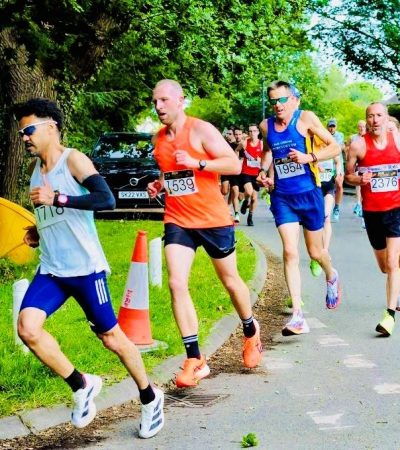
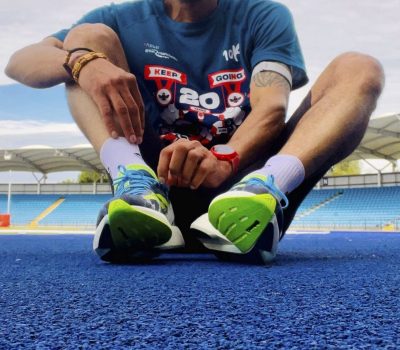
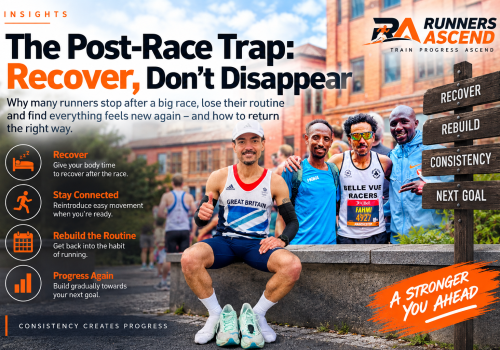
Recover from the race. Don't retire from running.

One of the common mistakes newer or less experienced runners make is what happens after a big race.


They finish a marathon, half marathon or another major goal, take some time off, and gradually stop running altogether.

A few weeks become a month. A month becomes two.


Then, when they decide it’s time to start training again, they expect to simply pick up where they left off.


But running doesn’t quite work that way.

Read More....
Scroll to Top